
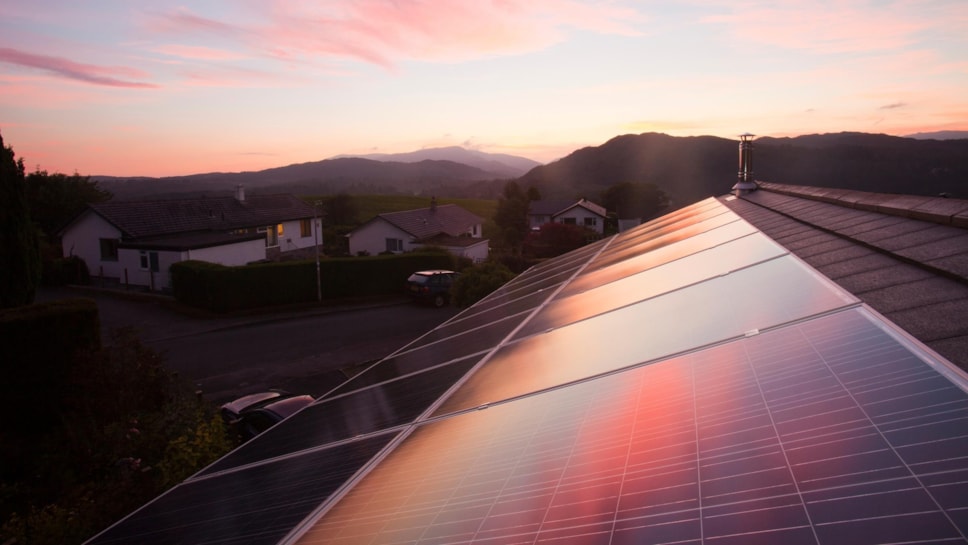
From pilot projects to national transformation: How we are scaling the technologies behind Britain’s clean energy future
E.ON and the Purpose Coalition 2026 report reveals how batteries, solar power, smart homes and local energy systems are moving from innovation projects to everyday solutions
The UK’s clean energy transition has entered a new phase.
For years, the conversation centred on ambition: setting targets, building renewable generation and committing to net zero.
Today, the challenge is different.
The question is no longer whether cleaner technologies exist, but whether they can be deployed at sufficient scale to transform how millions of people live, power their homes and manage their energy costs.
According to Powering Fairer Energy: E.ON & The Purpose Coalition Breaking Down Barriers Impact Report 2026, the answer increasingly lies in connecting multiple technologies into integrated systems that make clean energy simpler, more affordable and more accessible.
The report, produced in partnership with The Purpose Coalition, argues the next stage of Britain’s energy transition will be defined by scalability: the ability to take solutions that have proven successful in individual projects and deploy them across entire communities, housing developments and regions.
At the heart of that vision is a simple principle: sustainability cannot be separated from affordability.
Building the infrastructure of everyday clean energy
Technologies which once sat at the margins of the energy system are rapidly becoming mainstream.
Solar panels, battery storage, heat pumps, electric vehicle charging infrastructure and smart energy management systems are increasingly being viewed not as separate products, but as interconnected components of a new energy ecosystem.

We are already one of the UK’s largest installers of solar panels in new-build developments, helping integrate renewable generation directly into homes rather than treating it as an optional retrofit.
The significance of this shift extends far beyond carbon reduction.
By generating power closer to where it is consumed and giving households greater control over how energy is stored and used, these technologies are beginning to address one of the biggest challenges facing consumers: energy affordability.
The report highlights how solar generation combined with battery storage allows households to use more of the electricity they generate themselves while reducing exposure to volatile wholesale energy prices.
Increasingly, the focus is not simply on installing technology but on creating systems that work together automatically.
A glimpse of the future home
One of the most ambitious examples outlined in the report is our Next Gen Home proposition.
The initiative brings together solar panels, battery storage, heat pumps, electric vehicle chargers and a home energy management system within a single package designed to simplify the customer experience.
Rather than asking consumers to research, purchase and manage multiple technologies independently, the model combines installation, maintenance and energy management into a single proposition.
The goal is to tackle one of the biggest barriers to adoption: complexity.

For many households, the transition to cleaner energy has often involved navigating multiple suppliers, technologies and financing arrangements.
The Purpose Coalition report argues integrated models such as Next Gen Home can dramatically reduce those barriers while making low-carbon living more accessible.
Just as importantly, they help spread the benefits of clean energy beyond early adopters.
Lower bills, built in
Perhaps the clearest demonstration of this approach can be found at Avalon Grove in Worcestershire.
Developed in partnership with Cotswold Oak Homes, the project – pictured below – forms part of our Lower Bills, Built In initiative and illustrates how affordability can be embedded directly into the design of new homes.
Each property incorporates rooftop solar panels, a home battery and a central Home Energy Management System connected through the E.ON Home app.

The system automatically manages when energy is generated, stored and consumed, helping residents maximise the value of their own renewable generation.
The results are significant.
According to the report, integrated solutions of this kind can reduce household energy costs by up to half in some circumstances while providing greater certainty through predictable monthly payments.
The project also demonstrates a wider shift in thinking across the housing sector.
Rather than viewing energy as something added after construction, we are increasingly treating affordability and sustainability as design principles built into homes from the outset.
The battery revolution
Few technologies feature more prominently in the report than batteries.
Historically viewed as a supporting technology for renewable generation, batteries are increasingly emerging as one of the most important tools for tackling affordability, improving resilience and reducing pressure on the electricity network.
The report points to our battery project in Coventry as evidence of the potential.
There, battery storage combined with time-of-use tariffs has delivered average annual savings of £250 for participating households.
The implications extend well beyond individual customers.
At a system level, batteries help store electricity when renewable generation is abundant and prices are low, allowing it to be used later when demand rises.
This reduces strain on the grid and can limit the need for expensive infrastructure upgrades.
Through our partnership with Northern Powergrid, we have already demonstrated how distributed battery storage and insulation upgrades can simultaneously reduce household bills and ease pressure on local electricity networks.

The Purpose Coalition report also highlights our Battery Boost approach, which suggests large-scale deployment of batteries in social housing could generate annual savings of approximately £480 per household.
For policymakers searching for sustainable alternatives to repeated subsidy interventions, the findings offer a compelling case for technology-led solutions that deliver lasting benefits.
Local energy, local value
Perhaps the most transformative ideas in the report involve reimagining where energy comes from.
Projects such as Symphony are exploring local energy marketplaces which connect local renewable generation directly with local consumers.
The principle is straightforward: use electricity closer to where it is produced.
Doing so reduces transmission costs, improves efficiency and allows communities to retain more of the economic value generated by renewable assets.
The Purpose Coalition report suggests these local energy systems could eventually create a more transparent and resilient model of energy distribution while reducing reliance on traditional centralised infrastructure.
That concept is already being tested through projects such as St Luke’s School in Newham.

Solar panels installed at the school – pictured above – are helping reduce energy costs while generating surplus electricity that can potentially benefit nearby customers.
The initiative demonstrates how trusted community institutions could become local energy hubs, delivering benefits that extend beyond individual buildings.
Scaling the transition
For us, scaleability is ultimately about moving beyond isolated success stories.
Our research points to emerging opportunities including microgrids, local flexibility markets, community energy systems and the Future Homes Standard as mechanisms for accelerating deployment across the country.
The challenge is significant.
Britain’s energy transition requires not only cleaner generation but smarter consumption, greater flexibility and infrastructure capable of supporting growing electricity demand.
The Purpose Coalition report argues integrated technologies provide a pathway to achieving all three objectives simultaneously.
Chris Norbury, Chief Executive Officer of E.ON UK, – pictured below launching the document with Purpose Coalition Chair the Rt Hon Justine Greening – believes the transition must remain focused on practical outcomes.

He said: “In 2026, the focus is clear: moving from progress to practical transformation at scale.”
Chris added: “Our responsibility is to help customers and communities navigate that reality while building the cleaner, more resilient energy system Britain needs.”
He also said: “I am proud of the work set out in this report, and grateful to our colleagues, partners and customers who make it possible.
“The transition ahead will require ambition, innovation and collaboration. Most importantly, it will require a relentless focus on making sure new energy works for everyone.”
In other words, if the first chapter of Britain’s clean energy transition was about proving what was possible, the report stresses the next chapter will be about scale.
Increasingly, the technologies needed to deliver such a future are already being built into homes, communities and local energy systems across the country.
To read the full 2026 Purpose Coalition report, click here.
Legal information
The information (including any forecasts or projections) contained in these press releases (the "Information") reflects the views and opinions of E.ON on the date of the press release. The Information is intended as a guide only and nothing contained within these press releases is to be taken, or relied upon, as advice. E.ON makes no warranties, representations or undertakings about any of the Information (including, without limitation, any as to its quality, accuracy, completeness or fitness for any particular purpose) and E.ON accepts no liability whatsoever for any action or omission taken by you in relation to the Information. Any reliance you place on the Information is solely at your own risk. These press releases are the property of E.ON and you may not copy, modify, publish, repost or distribute it without our permission. © E.ON 2026
Download images from our media library.