
UK ‘risks ’two-tier energy transition’ without investment into homes
The UK risks a 'two-tier' energy transition unless cleaner and smarter technologies are made more affordable and accessible, warns E.ON as it publishes its latest report with The Purpose Coalition
- Poll finds public demand for long-term bill security rather than short-term support
- E.ON, working with The Purpose Coalition, calls for batteries, flexibility and smarter homes to avoid an unbalanced energy transition
The UK risks creating a “two-tier” energy transition unless cleaner and smarter technologies become more affordable and accessible to all households, warns a new report from E.ON and the Purpose Coalition.
The report, Powering Fairer Energy: Breaking Down Barriers, highlights the success of the energy transition will be increasingly judged on whether it can permanently reduce household bills across society, not just for those able to invest upfront in energy-saving technology.
As the country moves beyond short-term energy crisis support towards long-term decarbonisation, the report not only considers the role of electrification to cut bills now, but how a ‘ground up’ energy system can reduce network pressure, increase energy security and create jobs for greater economic prosperity.
Building on the report, new research1 from E.ON has found clear public desire for long-term support in lowering energy bills:
- Nine in ten (91%) households feel under financial pressure from energy bills, and support expanding long-term sustainable energy schemes
- 59% would prefer long-term cost security measures over short-term support
- 64% say high energy costs are negatively affecting their quality of life
The data also reveals a perceived social injustice among Brits that those with the greatest means are able to save money on their bills most easily, versus the most financially vulnerable. Seven in ten (70%) people believe it is unfair that some households can access technologies that reduce bills while others cannot.
Despite the pressures on household bills, public awareness of the effectiveness of the most accessible and affordable technologies, such as home batteries, remains low. Nearly three quarters (73%) of people are unaware home batteries can reduce energy costs without being paired to solar panels, highlighting a major awareness gap around the benefits newer energy technologies can deliver to households.
Chris Norbury, CEO of E.ON UK, who spoke at the launch of the report, said: “Households want more than temporary help with bills. They want lasting change and more control over how and when they use energy. The transition to clean power will only succeed if people feel the benefits in their everyday lives – otherwise we risk creating a two-tier energy system where those who need help the most are unable to access the technologies that lower bills for the long term.
“That means making batteries, flexibility and smart energy systems available to more households, not just those who can afford the upfront cost. We’ve already shown by investing directly in people’s homes, we can cut bills by £250 on average, delivering savings now and for the long term while increasing energy security, reducing network pressure, and creating jobs. That’s how we make new energy work for everyone.”
Rt Hon Justine Greening, Chair of the Purpose Coalition and former Secretary of State for Education, said: “The clean energy transition will only succeed if people can see and feel the benefits in their everyday lives.
"This report highlights the growing importance of making affordability central to the transition, ensuring that cleaner, smarter energy solutions are accessible not just to those able to invest upfront, but to households and communities across the country. E.ON’s work demonstrates how batteries, flexibility and local energy systems can help lower bills, strengthen resilience and create a fairer energy future for everyone.”

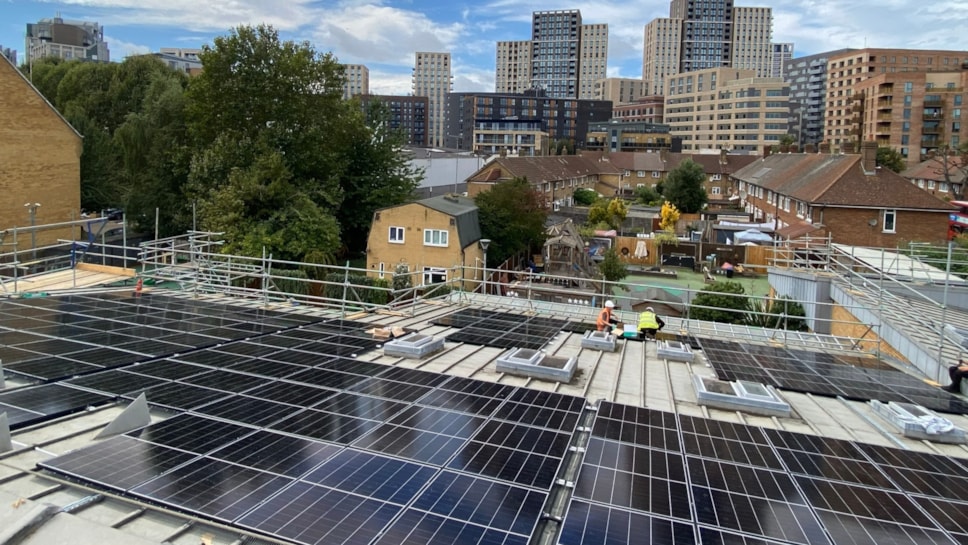
E.ON is working with local councils and other bodies around the country on a range of projects demonstrating the real-world impact of batteries, solar panels and other technologies when it comes to lowering bills. These include providing free batteries to struggling homes in Coventry, Starbeck and Crowle and in Glasgow, where E.ON is working with the City Council to tackle child poverty. E.ON has also developed the Lower Bills, Built In proposition for new-build homes, integrating smart energy systems, solar and batteries directly into new developments.
Smart energy shift could reduce bills for millions of homes
Powering Fairer Energy: Breaking Down Barriers is the latest report from E.ON and the Purpose Coalition, positioning the energy transition as both an environmental challenge and a chance to deliver lasting social and economic value, ensuring the benefits of new energy are shared as widely as possible – providing practical benefits to people while strengthening the wider energy system.
The report focuses on four key areas:
- Affordability and supporting those most at risk while creating long-term structural solutions to lower costs. E.ON Next has already provided £200m in targeted financial support, along with flexibility solutions and smart tariffs that automatically shift energy us to cheaper times.
- Sustainability and generating clean energy at scale by embedding clean energy into homes, infrastructure and communities. For example, the large-scale rollout of solar, battery storage, EV charging and smart systems; developing Next Gen Home proposition which bundles clean tech with low or no upfront cost; integrating energy solutions into new housing aligned with the Future Homes Standard.
- Inclusion and opportunity by ensuring the benefits of the energy transition are widely shared –jobs, skills, community investment and apprenticeships and future skills programmes.
- System transformation by shifting from short-term customer support to redesigning how the energy system works, making it more flexible, local and cost-efficient. For example, using battery storage as an alternative to costly grid upgrades and developing place-based energy solutions with councils such as Coventry and Glasgow.
The full copy of the Powering Fairer Energy:
Breaking Down Barriers report can be
downloaded here.

Notes to editors
1 Research conducted on behalf of E.ON by Clariti between 29th April and 8th May among 2,027 UK adults aged 18+
Legal information
The information (including any forecasts or projections) contained in these press releases (the "Information") reflects the views and opinions of E.ON on the date of the press release. The Information is intended as a guide only and nothing contained within these press releases is to be taken, or relied upon, as advice. E.ON makes no warranties, representations or undertakings about any of the Information (including, without limitation, any as to its quality, accuracy, completeness or fitness for any particular purpose) and E.ON accepts no liability whatsoever for any action or omission taken by you in relation to the Information. Any reliance you place on the Information is solely at your own risk. These press releases are the property of E.ON and you may not copy, modify, publish, repost or distribute it without our permission. © E.ON 2026
Download images from our media library.