
Fairer, greener, smarter: How city‑wide infrastructure investments can power social change
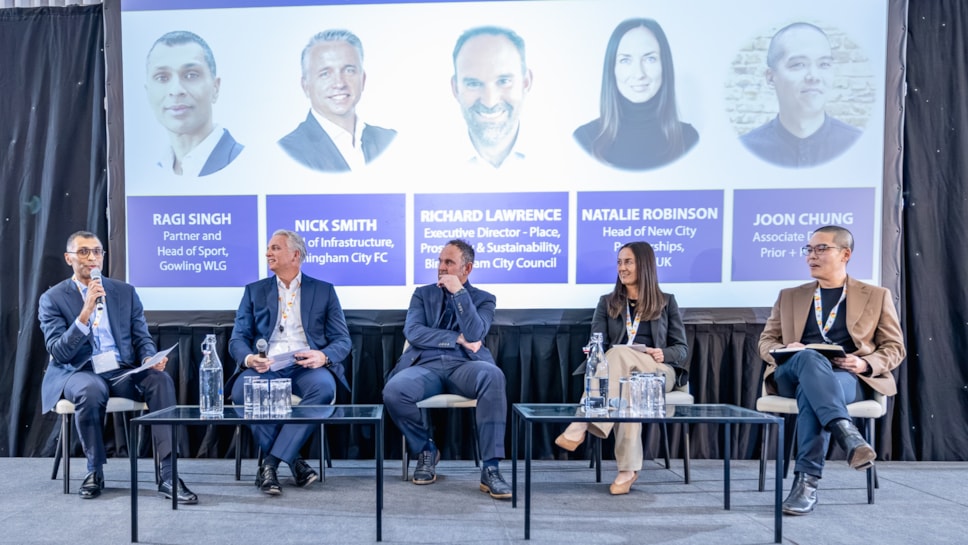
Major sports investment projects can be more than infrastructure, they can be powerful catalysts for fairer, more prosperous communities long after construction ends, E.ON’s Head of New City Partnerships, Natalie Robinson, tells the Beyond the Sport conference
“We know how sport connects communities. So what better way than to be able to demonstrate the energy transition by leading and showing the way?”
Speaking at the Beyond the Sport conference, Natalie Robinson, E.ON’s Head of New City Partnerships, was clear major sports redevelopments can provide perfect opportunities “to connect the people, the place, and the purpose” and bring communities together to enjoy the wider benefits of the energy transition such as more affordable energy, investment and economic growth, jobs and skills, even cleaner air.
The conference, held at Edgbaston Stadium in Birmingham, brought together more than 250 delegates from sport, business, policy, infrastructure and community sectors around the theme of sports-led regeneration in the West Midlands.
The £4 billion Sports Quarter development to the east of the city embodies this approach. Far more than a project to build a new stadium for Championship football team Birmingham City, the club’s US owners say it will generate around 16,000 jobs during construction and a further 14,000 permanent roles once complete. The scale of investment will also strengthen local supply chains, opening up significant new opportunities for business growth and supplier development across the region.

Building on the legacy of the Commonwealth Games and the expansion of Villa Park, the Sports Quarter is another example of the Second City using sport as a catalyst for wider social value – supporting skills, employment, community cohesion and long term inclusive growth.
Sport, Natalie explained, has a unique ability to unite people. That makes major sporting redevelopments the perfect platform to s how modern, low carbon infrastructure can transform whole cities from affordable energy and jobs to cleaner air and thriving local economies.‑carbon infrastructure can transform whole cities
Natalie said: “It's really clear that this [Birmingham Sports Quarter] massive development – a once in a lifetime event – is going to be energy intense. But rather than look at that as a big challenge and a problem, is absolutely also a big opportunity.
“It's more than just getting power and heat and cooling to the sports quarter, it's about how we connect the people, the place, and the purpose that the Sports Quarter is building on. It’s a way to inspire. We know how sport connects communities. So what better way than to be able to demonstrate the energy transition by leading and showing the way?
“For me, it's about inclusive growth. It's about driving better outcomes for the area . . . clean, local energy, better jobs and skills.”
As Natalie put it, this is about raising the bar. The technology exists. The ambition exists. Now the opportunity is to combine them to inspire change on a global stage.
That view was mirrored by others at the conference, especially West Midlands Mayor Richard Parker who said it was vital to when new investment comes to the city that the economic growth it brings are embedded into the city and “give opportunities to everyone”.
He said: “When we start to give young people opportunities at work that their families might not have experienced for two or three generations, you don't just turn the page for that person. I think we agreed we'd turn it for three or four generations. This is life changing stuff.”
And Jeremy Dale, Chief Executive of Birmingham City FC, echoed how major sports institutions and redevelopment projects like this attract investment not only into stadiums but into transport, hotels, conferences and housing, amplifying economic opportunities across whole regions.
He said the Sports Quarter is “about the design of a smart city built from the ground up” and a statement of confidence in Birmingham’s future, encouraging the city to “believe in ourselves and invest in our future rather than being constrained by our past or our present”.
Lessons from elsewhere: making sport and cities more sustainable and affordable
Natalie Robinson outlined two examples – one in the UK, one in the Netherlands – where E.ON is already delivering more affordable, sustainable and secure energy systems that bring benefits across their respective communities.

In London’s Silvertown, we’re bringing forward a new energy concept as part of a vast regeneration programme of more than 6,500 homes and businesses in the Royal Docks. The cutting edge ectogrid system – a first for the UK and a project recognised as a sustainability leader at COP28 – can cut carbon emissions by up to 88% by sharing heating and cooling across buildings and using nearby waste heat instead of adding new energy sources. It's a blueprint for how future ready energy systems can support entire neighbourhoods, not just individual developments.‑edge ‑ready energy systems can support entire neighbourhoods, not just individual developments.

Continuing the sporting theme, in the Netherlands E.ON subsidiary Essent works with Sparta Rotterdam FC to show how sport can drive innovation. By tapping into the natural aquifer in the ground beneath the stadium, and by maximising solar energy on the stadium roof, the club operates 100% electrically with no gas used in any of its operations. It’s another example of how rethinking energy can deliver both environmental and performance gains.
For E.ON, the scale and community impact of such developments is not a challenge to be solved but a once‑in‑a‑generation opportunity. From an energy perspective, generating and supplying power, heat and cooling is only part of the story. The real aim can be to design an energy system that supports the community long into the future – one that helps people upskill, helps businesses grow and ensures regeneration benefits are felt across the region.
Real transformation happens when infrastructure works for people – prioritising flexibility, fairness and choice. And with the right partnerships, it can help entire regions believe in – and invest in – their own potential.

Football often sits at the heart of communities across the country. Every weekend, thousands of grassroots clubs bring people together to play, volunteer and cheer on their local team.
The Greener Game, devised by The Football Association (The FA) and supported by E.ON Next, helps grassroots clubs to cut costs, reduce their impact on the planet and reinvest into grassroots football.
From smarter energy use in changing rooms to the solar installations now under way across the country, this project has made a real difference to clubs and their communities.
We know partnerships like these are essential to not just reducing bills and promoting cleaner energy, they can also help with creating jobs and opportunities that benefit communities and local people. By combining innovation with on-the-ground action, we can build a future where more affordable, more sustainable energy is possible for every home, business and community across the country.