
Paying for fairness: how smart support can unlock affordable, low‑carbon homes
A better deal for bill-payers: how batteries can bring value for homes and also reduce the risk of overbuilding the grid
The UK’s energy transition will only succeed if it is fair. That principle is not up for debate. But making the system fair in practice remains one of the biggest challenges of delivering a cleaner, more sustainable energy future.
Creating a new energy system – one that is affordable, reliable and sustainable – needs investment, and that investment has to be paid for. But if the benefits only go to those who can afford new technologies, the public will rightly question whether the transition is being done fairly.
That leaves a clear question: how do we fund the next stage of decarbonisation in a way that keeps bills down, protects vulnerable households, and speeds up delivery?
With clear policy direction, these tools can help lower costs and spread the benefits more widely.
Why fairness matters more than ever
The cost‑of‑living crisis has reshaped public expectations. Energy bills remain well above levels seen before the crisis sparked by Russia’s invasion of Ukraine and are a source of real concern for millions.
At the same time, our energy system is changing fast. Electric vehicles and rooftop solar are scaling up, heat pump sales are growing, and digital tools are reshaping when and how people use electricity.
All of this adds new pressure to local electricity networks.
If we respond by upgrading the grid anywhere and everywhere, the costs risk falling hardest on those least able to pay.
Flexibility: a fairness tool hiding in plain sight
Flexibility can reduce the need for costly upgrades to local power lines and substations. It does this by using things like home batteries to reduce pressure on the network at busy times – so in some areas upgrades can be avoided, and in others they can be pushed back.
This matters because works to reinforce the network show up in the ‘network charges’ paid by all bill‑payers. Using flexibility to reduce or delay those upgrades can help keep future bills lower, especially for households with the least financial headroom.
It can also do more. When batteries are installed in homes, that flexibility can deliver direct bill savings for households – and by targeting batteries at social housing we can focus those benefits on those who often need it most.
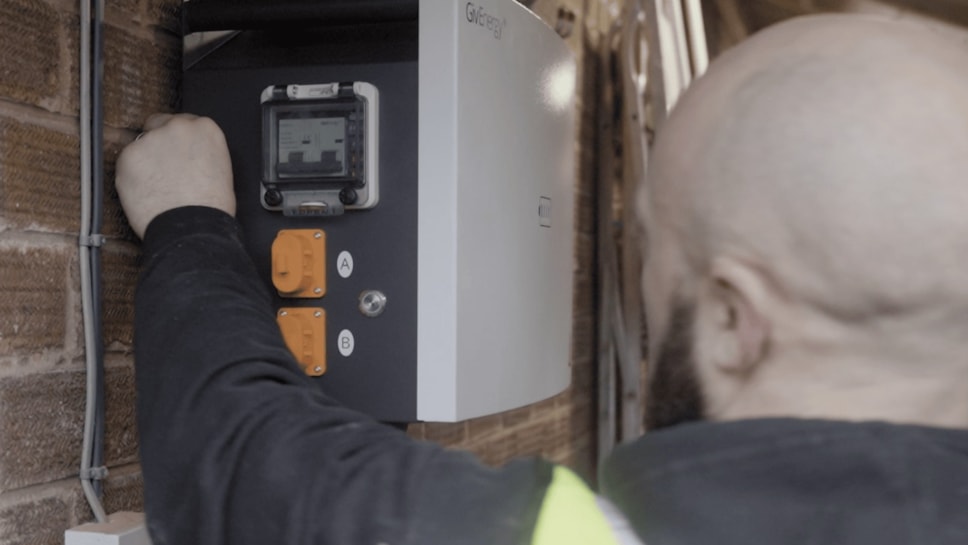
E.ON’s model is a practical example. Dedicated batteries can be installed in social housing in constrained areas, with households receiving guaranteed bill credits. Residents don’t need to buy new technology or change how and when they use electricity.
Our modelling suggests savings of around £220 a year for participating homes. For families balancing tight budgets, that is meaningful support delivered in a simple way.

There are wider benefits too:
- Up to £1.56 billion in cumulative savings by 2030, largely by avoiding some new network assets (such as cables and substations).
- Up to 77% of local capacity needs covered through social housing deployment alone.
- Lower system balancing costs, helping reduce ‘non‑energy costs’ across domestic and business bills.
In other words, the benefits can extend beyond individual neighbourhoods and reduce costs across the wider system.
The role of public support: small input, large multiplier
The Government’s Warm Homes Plan is a chance to support households directly while also unlocking private investment that increases scale and impact.
The support needed can be modest. A part‑contribution to the upfront cost of batteries can make projects viable in more constrained areas. Each pound of public funding can attract multiple pounds of private capital.
Why society benefits from supporting social housing first
Social housing residents are more likely to live in less efficient homes, face higher levels of fuel poverty, and have less access to low‑carbon technologies. Starting here is not only fair, it is also an efficient way to target support.

There is a practical advantage too. Social landlords can deploy technology at scale and at pace, with strong resident engagement – making them well suited to targeted, system‑level solutions.
A net zero system will only succeed if it is built with people in mind. That means clean energy that is affordable, infrastructure that is efficient, and support aimed at those who stand to benefit most.
Combined with targeted public support, flexibility offers a practical route to deliver this without adding costs for households already under pressure.
Paying for fairness is not about paying more, it is about paying smarter.

You can download our full report on the role batteries can play in supporting networks and driving more affordable energy here