
Why women’s sport is vital to powering a fairer future for all
E.ON is continuing to link grassroots confidence, equality and community progress into one wider mission for our workplace and beyond.
At E.ON we believe in making new energy work for everyone – and recognise building a cleaner, fairer energy future is not simply about infrastructure, technology or investment.
It is about people, and ensuring the individuals who will help shape tomorrow's energy world are set up for success in all areas.
That ambition sits at the heart of our support for women and girls in sport.
The UK’s transition to clean energy will require new skills, new thinking and a workforce capable of solving some of society's most complex challenges.
It will require engineers, innovators, leaders and decision-makers from every background.
Diverse organisations consistently deliver stronger outcomes – with companies in the top quarter for executive gender diversity found to be up to 39% more likely to outperform on profitability.
For us, building an inclusive workforce is just the right thing to do.
Our progress includes initiatives such as our Women in Leadership Programme and Fast Forward Network, which helps more women progress into senior roles.
And 37% of E.ON UK’s board is female – well above the industry average.
We also believe creating future leaders starts long before a career begins.

Research has shown 94% of women in C-suite positions have played competitive sport.
Sport develops many of the qualities employers value most: resilience, teamwork, confidence, leadership, communication and mental strength.
The football pitch, netball court or athletics track can become an early training ground for future skills.
That insight has helped shaped our support for Women in Sport.
Through partnerships with the England Lionesses, as well as with Nottingham Forest Women, Nottingham Forest Netball and Veloce Racing – alongside grassroots football initiatives across the country – E.ON is helping increase participation in sports among women and girls, and therefore raising the visibility of female role models and creating more pathways into purposeful careers.

As one of the UK’s largest energy suppliers – serving 5.6 million households and 370,000 businesses while employing more than 8,000 people and apprentices across our brands – we are committed to providing a place of work where everyone can thrive.
We also invest in programmes such as Kids in Sport and Powering Performance, the company's nationwide Women in Sport initiative.
Our recent Powering Performance survey, launched by E.ON at Wembley Stadium in November 2025, gathered voices from across sport, media and business to better understand the barriers facing women and girls in sport – from grassroots participation through to leadership and elite competition.
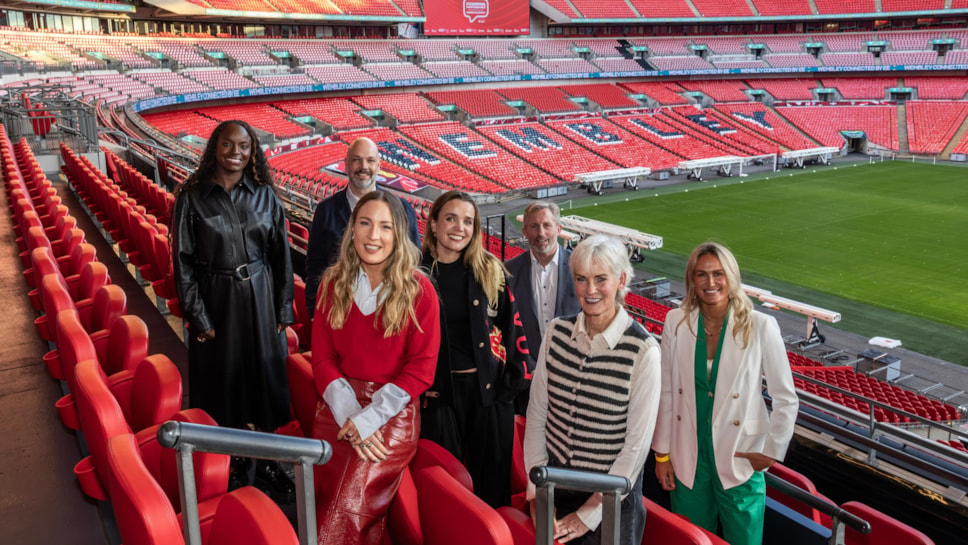
More than 150 guests attended the launch of the poll, including Judy Murray, Eni Aluko and Em Clarkson – pictured above at the event.
Among its most striking findings – which can be read in full here – was 60% of women stop playing sport by the age of 34, compared with 37% of men, highlighting a significant drop-off at key life stages.
For E.ON, such findings underline an important point: the significance of women's sport lies not only in athletic achievement, but in its wider social impact.
It has also found girls remain significantly less active than boys, with a 22% participation gap in team sports.
But research also shows women who played sport as children are 50% more likely to hold senior professional roles as adults.
For Sports Minister Stephanie Peacock, the implications extend far beyond athletics.
Speaking at the Westminster Insight Women and Girls in Sport Conference in April 2025, she declared: “Girls need to know from a young age that they belong in sport.”
She described women's sport as a driver of public health, economic growth and social equality, highlighting audiences for women’s sport in the UK reached more than 44 million in 2024 – an increase of almost 40% in two years – while Deloitte forecast global women's elite sport revenues would reach £1.8billion.
Ms Peacock also pointed to the transformative impact of Sport England's This Girl Can campaign, which has inspired nearly four million women to become more active, with eight in ten women saying it improved their confidence.
E.ON sees those same themes reflected in its wider workforce strategy.
We have made inclusion and diversity a central pillar of our identity as we help lead Britain’s transition to clean energy.
From engineers and sustainability specialists to apprentices and future executives, we believe the energy sector can only thrive if it attracts talent that genuinely reflects modern Britain.

This commitment has also been recognised nationally, with E.ON this year ranked in the Top 10 Best Places to Work in the UK for the second year in a row by The Sunday Times.
The recognition reflects E.ON’s inclusive, purpose‑driven culture and strong focus on skills, wellbeing and belonging.
We were also Highly Commended by the Times in the Best Places to Work for Women category, recognising our continued focus on widening opportunity, supporting progression and creating a workplace where women can thrive, regardless of their background or stage of their career.
Based entirely on colleague feedback, the recognition reflects E.ON’s ongoing commitment to creating an inclusive, forward‑thinking and purpose‑driven workplace, where people feel supported to grow their careers and make a meaningful difference every day.
Helen Bradbury, Chief People Officer at E.ON UK – pictured below – has said: “We know there are still barriers and challenges that need to be addressed to help to build an environment where everyone can thrive. We must continue to lift up these voices in all areas, including sport.”

Our Kids in Sport initiative has also travelled across the UK, transforming school halls into spaces where sport intersects with technology, sustainability and creativity.
In Inverclyde earlier this year, pupils from St Patrick’s Primary School – pictured below with Judy Murray – participated in coding workshops, sustainability challenges and first-aid exercises alongside traditional sporting activities.
And in Liverpool, children at Mab Lane Primary School combined football drills with renewable energy challenges and kit-design sessions.

The message was deliberate: there is no single route into modern industries – whether in sport, energy or leadership.
For E.ON, women’s sport represents something far larger than sponsorship visibility or corporate branding.
It reflects our belief confidence, ambition and inclusion are deeply interconnected.
Because making new energy work – for everyone – means ensuring everyone has the opportunity to help shape it.
And in doing so, we are already helping create a future that truly belongs to everyone.
To learn more about E.On’s Early Careers and how we are enabling people to build their futures from the ground up, click here.
Legal information
The information (including any forecasts or projections) contained in these press releases (the "Information") reflects the views and opinions of E.ON on the date of the press release. The Information is intended as a guide only and nothing contained within these press releases is to be taken, or relied upon, as advice. E.ON makes no warranties, representations or undertakings about any of the Information (including, without limitation, any as to its quality, accuracy, completeness or fitness for any particular purpose) and E.ON accepts no liability whatsoever for any action or omission taken by you in relation to the Information. Any reliance you place on the Information is solely at your own risk. These press releases are the property of E.ON and you may not copy, modify, publish, repost or distribute it without our permission. © E.ON 2026
Download images from our media library.