
'National wealth, national health' – why flexibility is the key to affordable, sustainable energy
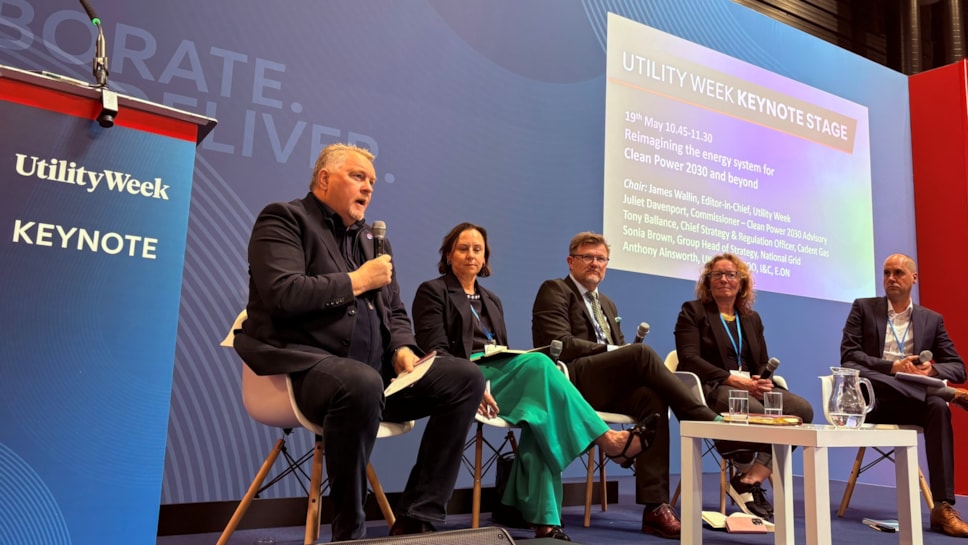
Anthony Ainsworth, COO of npower Business Solutions, tells Utility Week Live how flexibility – in homes and businesses – is a key part of making the energy transition affordable and sustainable
“Net zero is incredibly important because it's not just about national wealth, it's also about national health. An affordable system, and the relative cost of energy, whether it's for consumers or businesses, is super critical to get right.”
Speaking at Utility Week Live, Anthony Ainsworth, Chief Operating Officer of npower Business Solutions, set out the important challenge for the UK energy debate. At the heart of his message was the idea affordability and sustainability cannot be seen as competing priorities.
Creating an energy system that is cleaner, more secure and better for economic growth must also be affordable – and flexibility is one of the best ways to make that happen.
In other words, the cost of energy is not a side issue in the journey to net zero; it is one of the defining tests of whether the transition works for households, businesses and the wider UK economy.
Anthony’s starting point was pragmatic. The UK’s energy costs are shaped by a range of factors, from the mix of generation sources, from fossil fuels to nuclear and renewables, the overall design of the energy market, and also by how policy and investment costs are recovered.
And he added there is added risk in trying to pay for the switch to more renewable energy generation too quickly, with financial structures having a huge impact on the cost of national infrastructure investment. By spreading those investment costs over a longer period, the system becomes more affordable while still delivering long-term benefits for future generations:
“It’s like trying to pay off the mortgage of your house in five years rather than over 30 years. If you looked at what makes up a bill and shifted some of those costs over the longer term, you would actually drive down the cost of it.”
That is where flexibility comes in, as a practical route to lower system costs: reducing demand at peak times, shifting the times energy is used, and building more storage into the system at both household and industrial level. Done well, this can ease pressure on networks, it can reduce the need for expensive grid reinforcement and can help Britain make better use of clean power when it is available. For customers, that matters because system costs eventually show up on bills. A smarter system is not only more resilient; it is cheaper to run.
E.ON is already seeing what that looks like in practice. Home battery projects in Coventry and Glasgow are showing how flexibility can work for households, especially those under financial pressure. In the latest Coventry trial, batteries are installed with no upfront cost, allowing families to store electricity when it is cheaper and use it when prices are higher.
Early data shows savings of up to £360 a year for participating households, while also reducing pressure on the grid and supporting greater use of renewable power. That is exactly the kind of proof point Anthony called for: live examples that show affordability, sustainability and flexibility can move together rather than in opposition.
He said: “We've got lots of real examples of what we do at E.ON, whether it's in the tariffs and products we offer, there are real proof points of real savings for customers in £200 to £300 a year.
“We need to talk much more about those. You can reduce the cost of a customer's bill without actually having to change up the system, there are things that are live now that can do that.”
The same principle is increasingly relevant to the wider policy debate, including the next electricity distribution price control. E.ON’s recent analysis has shown that targeted battery deployment in homes could provide up to 77% of the additional local grid capacity the UK will need by 2035, rising to 99% if rolled out across all housing types, while potentially cutting reinforcement costs by £3.3 billion.
For Anthony, this is precisely why flexibility deserves a much bigger role in policy thinking. If the UK creates the right environment for flexible technologies, it can reduce bottlenecks between new developments and necessary grid connections , make better-timed investment decisions and avoid pushing unnecessary costs on to billpayers.
Another important part of Anthony’s argument was that energy planning must happen at a system-wide level. Too often, debates about infrastructure, markets and regulation become fragmented, with one part of the system working against another.
His warning was that Britain cannot afford a “squeezing the balloon” approach, where pressure is reduced in one place only to pop up somewhere else. Instead, incentives should reward innovation, creativity and outcomes that benefit the whole system, not simply preserve older ways of working.
Transformative impact in the cold chain
Reed Boardall is one of the UK’s largest cold chain businesses, handling and storing frozen food from manufacturers across Europe and delivering to the UK’s best-known supermarkets and food service providers.
Their 55-acre site in Boroughbridge, North Yorkshire, can house 168,000 pallets, making it one of the most extensive cold storage facilities in the country. It operates 24/7 and is constantly drawing power.

The site provides great potential for energy flexibility and nBS has trialled its Demand Shift service to reduce power use during peak times, selling back the pre-hedged volume in short-term markets to generate revenue.
Being able to turn down supply for a short period during peak demand periods had no impact on day-to-day operations so this was an easy win for the company.
As the UK relies on increasing volumes of renewable generation, there are growing opportunities for flexibility in industrial sectors, all of which illustrate the broader point that flexibility is a commercial tool that can support competitiveness, resilience and sustainability.
Flexibility remains relatively untapped in the current policy system, despite its ability to cut system costs, reduce the scale of network investment required and deliver direct consumer benefits. That is why Anthony Ainsworth’s call to “talk much more” about real examples matters. Across E.ON, there is growing evidence that flexible energy is already delivering results: home batteries lowering bills for families, targeted storage helping avoid unnecessary network upgrades, and industrial demand shifting creating new value for British businesses.
For the UK, the implication is straightforward. A flexible energy system is not a nice-to-have alongside the transition; it is one of the main ways to make the transition affordable, investable and durable. If Britain wants an economy powered by electrification, digital technology and cleaner domestic generation, then it needs policy and planning that reward flexibility at every level.