
Labour Party Conference 2026: How E.ON is placing ‘Powering Lower Bills’ at the heart of the energy transition
We used the flagship Liverpool event to showcase how we’re putting pounds back in people’s pockets.
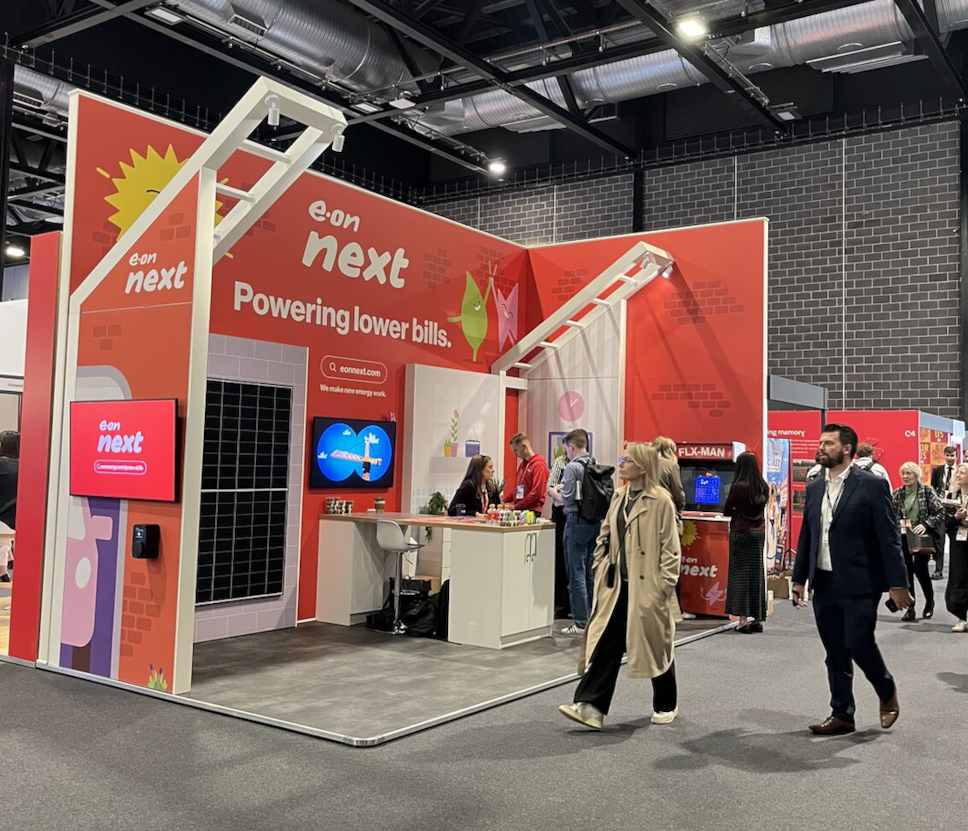
E.ON’s presence at this year’s Labour Party Conference was driven by one theme – Powering Lower Bills.
And we showcased our focus on bringing bills down with everything from conversations on the conference floor to panel discussions on the cost of living.
Our appearance at the event – which included our stand pictured above – came at a pivotal moment.
Energy affordability was firmly on the political agenda at the Liverpool-based conference, with the Government setting out its own ambition to reduce costs for households and businesses.
For us, the message was clear: Britain does not have to choose between tackling climate change and making energy more affordable.
Done properly, they are the same challenge.
We already support 5.6 million households and 370,000 businesses in the UK – and after we completed our new agreement to aquire UK energy supplier OVO, around four million more customers are expected to be added.
Our focus is increasingly on using smarter technology, clean energy and flexibility to deliver permanent reductions in energy costs – rather than simply helping customers absorb higher bills.
As Chris Norbury, CEO of E.ON UK – pictured below – said after our panel discussions at Labour’s flagship event: “Going into the conference it was clear that there would be consensus around the need to help the most vulnerable and lower energy bills for everyone.
“We’re heading into a tough winter for households and businesses – one that will see energy bills rise further.
“I’ve welcomed constructive discussions about the importance of flexible solutions for energy customers.
“By investing in assets like batteries and solar, we can build an energy system from the ground up, put customers in control of their energy use and cut bills.
“And we can do this while reducing network pressure, our reliance on expensive fossil fuels, increasing energy security, and creating more green-skilled jobs.
“That’s how we can put pounds back in customers’ pockets, deliver for the communities we serve, and make new energy work for everyone.”
From talking about affordability to delivering it
E.ON came to Liverpool with evidence that this is already happening.
Over the past three years, we have provided more than £200million of targeted support to vulnerable customers, including around £75million in the past year.
That help ranges from debt relief and grants to flexible repayment arrangements and replacing essential but inefficient or broken household appliances.
But helping customers through a difficult winter cannot be the limit of our ambition.

Our work on The Home Age in Coventry is demonstrating how batteries can automatically store cheaper electricity and use it when prices are higher.
Households in the project – like the one pictured below – are saving around £255 a year on average, rising to around £415 for larger families and potentially around £600 for households with particularly high medical energy needs.
We are building on that approach in Glasgow, working with Glasgow City Council and The Wise Group to combine free batteries with energy efficiency measures, debt support and wider help for households at risk of fuel and child poverty.
The model is designed to deliver around £30 a month – £360 a year – in guaranteed savings.
But this isn’t simply about compensating people for an expensive energy system.

It is about redesigning that system so that it costs them less in the first place.
As Chris said in our latest Purpose Coalition report: “For E.ON, the clean energy transition is not simply about technology. It is about people. It is about helping customers reduce bills, supporting those in vulnerable circumstances, giving households greater control over their energy, and ensuring that the benefits of cleaner energy are shared as widely as possible.”
Taking the affordability argument across the conference
Our affordability message connected the different conversations E.ON took part in throughout the Liverpool conference.
At the More in Common and Resolution Foundation panel, Chris joined the debate on how government can address Britain’s cost-of-living crisis.
And at two Purpose Coalition events, the discussion widened to how the energy transition can create jobs, skills, better living standards and inclusive growth.
Anthony Ainsworth, COO for E.ON UK’s Industrial & Commercial division – pictured below – joined the SME4Labour roundtable to discuss how energy policy can help small and medium-sized businesses thrive.
Head of Sustainability at E.ON UK, Jo Horton, spoke at the New Statesman panel on women in energy, exploring how Britain builds the diverse workforce the transition will require.

And Steve Davies, E.ON’s Director of Strategy & Commercial, joined the ADE panel asking how we create an energy system powered by people, while E.ON was also represented at the Women’s Rally.
Across those conversations, the subjects differed but the argument connected them: lower bills, smarter energy, better jobs and greater opportunity need to be delivered together.
That means moving legacy policy costs away from electricity bills, improving targeted support for vulnerable households, making technologies such as batteries, solar and flexible tariffs accessible to more people – and creating a regulatory system that allows innovation to translate into lower bills automatically.
It also means remembering affordability is a business issue.
We support more than 370,000 UK businesses, and our conference message was that high electricity costs can constrain investment, competitiveness and growth.
Businesses need practical support to improve efficiency and electrify, alongside a clearer pathway towards more affordable electricity.
Making new energy work for everyone
A smarter home can mean a smaller bill.
But thousands of smarter homes can collectively reduce pressure on the electricity network.
It’s a system that will work quietly in the background, automatically finding cheaper times to use or store electricity.
And it’s one that allows families without thousands of pounds to spend upfront to benefit from the technologies of the future.
It is also a system where the people struggling most with the cost of energy are among the first to benefit – not the last.
That was the argument E.ON took to Liverpool.
And after a conference dominated by the question of how Britain can make the essentials of everyday life affordable again, it is also the test that matters most: not simply how much new energy we build, but how much difference it makes to the people paying their bills.
Legal information
The information (including any forecasts or projections) contained in these press releases (the "Information") reflects the views and opinions of E.ON on the date of the press release. The Information is intended as a guide only and nothing contained within these press releases is to be taken, or relied upon, as advice. E.ON makes no warranties, representations or undertakings about any of the Information (including, without limitation, any as to its quality, accuracy, completeness or fitness for any particular purpose) and E.ON accepts no liability whatsoever for any action or omission taken by you in relation to the Information. Any reliance you place on the Information is solely at your own risk. These press releases are the property of E.ON and you may not copy, modify, publish, repost or distribute it without our permission. © E.ON 2026
Download images from our media library.