
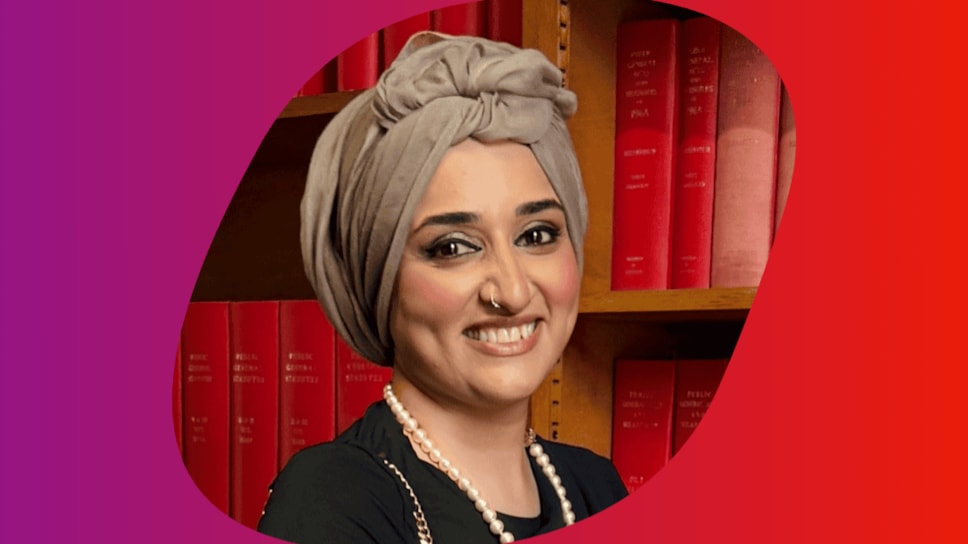
Celebrating South Asian Heritage Month: Aisha's story
As part of South Asian Heritage Month, Team Lead Aisha Zia reflects on the values, traditions and lived experiences that have influenced her career, and how embracing different perspectives helps build stronger teams and better outcomes for customers.
South Asian Heritage Month is an opportunity to celebrate the rich cultures, histories and experiences that shape our colleagues across E.ON. For me, it's also a chance to reflect on how my Pakistani heritage continues to influence the way I work, lead and connect with others every day.
One of the greatest gifts my heritage has given me is resilience and resourcefulness. Growing up, I learned the value of jugaar – finding creative solutions and making things work, even when resources are limited or circumstances are unpredictable. That mindset has stayed with me throughout my career.
It's also shaped how I build relationships at work. I believe warmth and professionalism go hand in hand. You can be ambitious, driven and focused while also creating an environment where people feel welcome, supported and valued.
Two values have guided me throughout my professional journey: Haq Halal – earning an honest and ethical living – and Khidmat – serving others.
Integrity has always been central to how I approach my work. Success is important, but achieving it in the right way matters just as much. That's why transparency, fairness and accountability are principles I try to bring to every project and every decision.
Community is another value that has had a lasting impact on my leadership style. Pakistani culture places a strong emphasis on collective success rather than individual achievement, and that naturally influences how I lead. Rather than focusing solely on my own goals, I often ask myself, "How is the wider team doing?" and "How can I help others succeed alongside me?"
As someone who chooses to wear the hijab, I've also learned the value of confidence and authenticity. It has taught me to be comfortable standing out, to own my space and to let my work, character and ideas speak louder than assumptions or stereotypes.
There are also aspects of my faith and culture that I wish more people understood.
Ramadan, for example, is about far more than abstaining from food and drink. It is a month of reflection, charity, discipline and spiritual growth, often involving late-night prayers while continuing with the demands of everyday work.
Small acts of awareness from colleagues, such as avoiding late afternoon team meals or recognising Eid celebrations alongside other major holidays, can make a meaningful difference and help people feel seen and included.
Similarly, modesty is sometimes misunderstood. Choosing to dress modestly or not shaking hands with male colleagues is a personal expression of faith and respect. It's not about being unfriendly or disengaged; it's simply about setting personal boundaries while continuing to build positive professional relationships.
I've also seen first-hand how my background can bring a different perspective when solving problems.
I once supported a customer who was extremely distressed after receiving an unexpected household bill following a system update. They had already spoken with another advisor, who had directed them to an online portal, but this had only increased their frustration.
Instead of following the same approach, I focused first on building trust. I listened patiently, acknowledged their concerns and spoke with the warmth and respect I would offer members of my own family. During the conversation, I noticed a younger relative helping in the background. After completing the necessary security checks, I involved them in the discussion so we could resolve the issue together.
The conversation changed almost immediately. Once the customer felt heard and respected, we were able to clearly explain the billing issue and process a refund for the incorrect charge. Not only was the complaint resolved, but we also prevented further escalation by creating a positive experience. Understanding the importance of family, trust and community helped shape a solution that went beyond simply following a process.
For me, inclusion means creating an environment where people don't feel they have to leave parts of their identity behind in order to succeed.
That can be as simple as ensuring team events cater for different dietary requirements, continuing to provide quiet spaces for prayer, respecting personal boundaries and creating opportunities for everyone to contribute and be heard. It also means making sure diversity is reflected at every level of the organisation, including leadership, so that a wide range of voices help shape decisions.
Perhaps most importantly, inclusion is about curiosity. No one person can represent an entire culture or faith, and asking respectful questions helps us all learn from one another.
South Asian Heritage Month reminds us that our differences are one of our greatest strengths. When we create space for people to bring their whole selves to work, we build stronger teams, better relationships and a more inclusive workplace for everyone.