
Repair, restore, replace: why ongoing maintenance is essential for the City of London’s energy infrastructure
Just as any car needs maintenance and attention to keep it running smoothly, so too does our energy infrastructure
Our City of London heat network was originally commissioned in 1993 and we give it constant care and attention to make sure it keeps up with new technologies and priorities, changing building environments, and the inevitable stresses of time.
And just like the pipework originally installed decades ago has to be replaced and upgraded to withstand the pressures of modern city life, maintenance is sometimes not just a matter of repair but an act of futureproofing for London in the decades to come.
For more than three decades, the Citigen district heat network has quietly powered, heated and cooled homes and businesses across the Square Mile.
This extensive infrastructure, which now snakes more than 12km via service corridors and tunnels underneath the City’s streets and supplies as many as 29 buildings from the Barbican and Guildhall to London Wall and Smithfield Market, has become an integral part of the community’s energy supply.
Like any complex system, it demands regular care and attention to keep running efficiently and to remain fit for the future.

E.ON Engineer Zoe Abela (pictured) explains how we’re working to ensure the longevity of the network to safeguard it for the future by carrying out a programme of ongoing maintenance, managing repairs (in one of the business and most complex cities in the world, no less!) and, most importantly, keeping the energy flowing for customers while all this takes place.
The challenges of upkeep
Working on such a system is no small feat. Some of the pipework, originally laid shallow beneath busy roads, is now exposed to greater risks from increased traffic and urban development and at time repairs are required.
However, in recent years our engineers have enhanced protection, adding robust casing around pipes to shield them from external pressures, highlighting how advances in knowledge have transformed our approach to maintenance.
Today’s design is more advanced than three decades ago, modern pipe designs allow for movement within the ground, helping to prevent future leaks. Lessons learned from past incidents enable teams to better protect vulnerable areas.
This continuous improvement ensures the system is resilient enough to meet today’s demands and tomorrow’s uncertainties.
Keeping the heat on and minimising disruption
One of the greatest priorities during maintenance is to ensure that customers don’t lose supply to heat or cooling while work takes place.
By ingeniously splitting the network into ‘islands’ using isolation valves, engineers can isolate affected areas and activate temporary boilers wherever necessary. This approach guarantees uninterrupted service, even during major repair works.

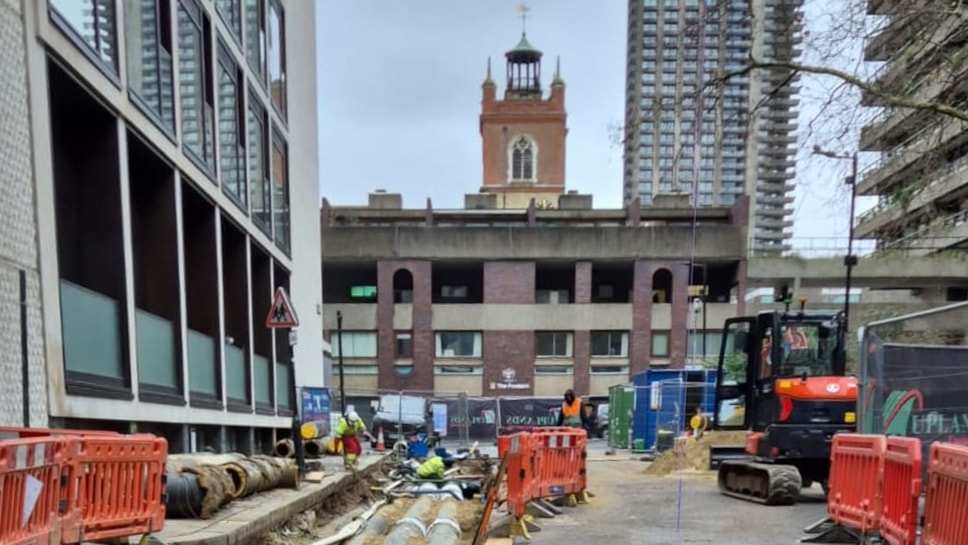
One example of this is a leak discovered at the end of last year in a 30-year-old concrete anchor design pipe in the Fore Street area which led to a full pipe replacement to futureproof the network.
This repair involved 70 metres of pipe excavation, accounting for 140 metres of pipework beneath the bustling Barbican, Guildhall, and London Wall areas.
During the 14 weeks of repair our engineers managed to keep the heat on via isolation valves and by connecting a minimal number of customers to an emergency boiler.
However, essential work doesn’t come without some disruption, emergency road closures are part and parcel of the job, as are occasional short interruptions of supply that cannot always be avoided.
Looking ahead
Maintaining the Citigen district heat network is about more than just repairs, it’s about preparing for the future. Plans are under way to connect another 200 properties, further expanding the reach and benefits of this vital infrastructure.
As a company, we remain committed to investing in the network and, through innovative planning and creative approaches, are continuing to upgrade this complex system that winds through a maze of tunnels, service corridors, and car parks beneath the streets of the City of London.