
A lesson in energy efficiency: E.ON helps University of Glasgow’s Bute Hall cut ventilation use and energy costs
Smarter control of heating and ventilation is helping the University of Glasgow to lower its energy bills and get more value from one of its most important and historic buildings
A smarter approach to controlling heating and ventilation has helped the University of Glasgow to cut energy use and associated operating costs at its historic Bute Hall by 85% – showing how organisations can protect budgets and improve performance without compromising the buildings and services people rely on.

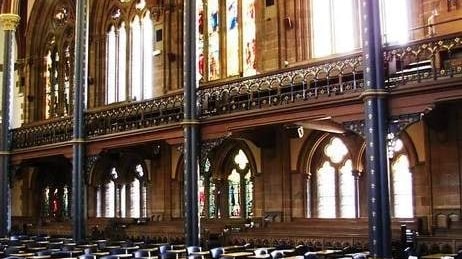
Designed by Sir George Gilbert Scott and completed in the 1880s, Bute Hall is renowned for its Gothic Revival architecture, vaulted ceiling, stained-glass windows and ornate pillars.
It remains at the heart of university life, hosting graduations, examinations, church services and public lectures.
Like many older and architecturally important buildings, however, its age and changing patterns of use create significant operational challenges.
Heating and ventilating a large hall can be costly, especially when systems run whether the space is occupied or not.
Working with the university and CBRE, E.ON Control Solutions (ECS) applied its Building Management System expertise to give Bute Hall much greater control over when and how energy is used.
ECS supports thousands of business sites across Europe, helping organisations to reduce energy use where it can be avoided, lower operating costs and improve building performance.

The result is a practical example of how energy can move from being an unavoidable overhead to a more controllable asset. For organisations under pressure to manage costs, better energy performance can release money for core services and investment while strengthening long-term operational resilience.
Bute Hall has undergone a remarkable transformation, setting a new benchmark for energy efficiency and sustainability within historic venues.
By introducing new controls that actively manage energy demand, the hall has reduced both energy use and operating costs by 85%, while cutting CO2 emissions by 83%.
That equates to annual energy savings of more than 13,000 kWh, cost savings exceeding £3,200 and a reduction of 2.67 tonnes of carbon.
For the university, the benefits go beyond a lower bill. Every pound no longer spent on wasted energy can remain available for teaching, research, student services and ensuring that Bute Hall’s unique heritage is preserved for generations to come. At the same time, lower demand supports the university’s sustainability ambitions and reduces its exposure to unnecessary energy use.
Using energy only when it is needed
Previously, Bute Hall’s two air-handling units operated at a fixed speed and to a fixed schedule. In practice, they could run for 12 hours a day, seven days a week, regardless of whether the venue was full, partly occupied or empty.
That meant the university was paying to heat and ventilate the building when not needed. With energy representing a substantial share of many organisations’ running costs, eliminating this kind of waste can make a direct contribution to affordability and financial resilience.
ECS installed a demand-led building management system using occupancy sensors, people counters and CO2 sensors. In simple terms, the system gives the building live information about how the hall is being used.
The intelligent controls then adjust heating and ventilation in response to actual occupancy, the number of people present and air-quality data, rather than relying on a rigid timetable.
The controls monitor conditions continuously, automatically adjusting or restricting the ventilation plant according to occupancy numbers and CO₂ levels. This keeps Bute Hall comfortable and ready for use while avoiding unnecessary consumption. Today, between 60% and 80% of its annual energy spend can be influenced through the building energy management system.
The project also shows that historic buildings do not have to be accepted as inherently expensive or inefficient. Smarter control can improve performance and reduce costs without diminishing their character or the role they play.
E.ON’s building management engineers work with more than 5,500 business sites across Great Britain, from (further north than) John O’Groats to (almost) Land’s End. These buildings are securely and remotely managed from E.ON’s Energy Management Centre in Glasgow.
There, specialists combine data, technology and operational experience to identify inefficiencies and help each site strike the right balance between day-to-day needs and energy performance.
Bute Hall demonstrates that the cheapest and most secure unit of energy is often the one an organisation no longer needs to use. By combining intelligent controls with expert energy management, businesses and public institutions can reduce avoidable costs, improve resilience and cut carbon, making energy more affordable, sustainable and secure for the people and services that depend on it.